

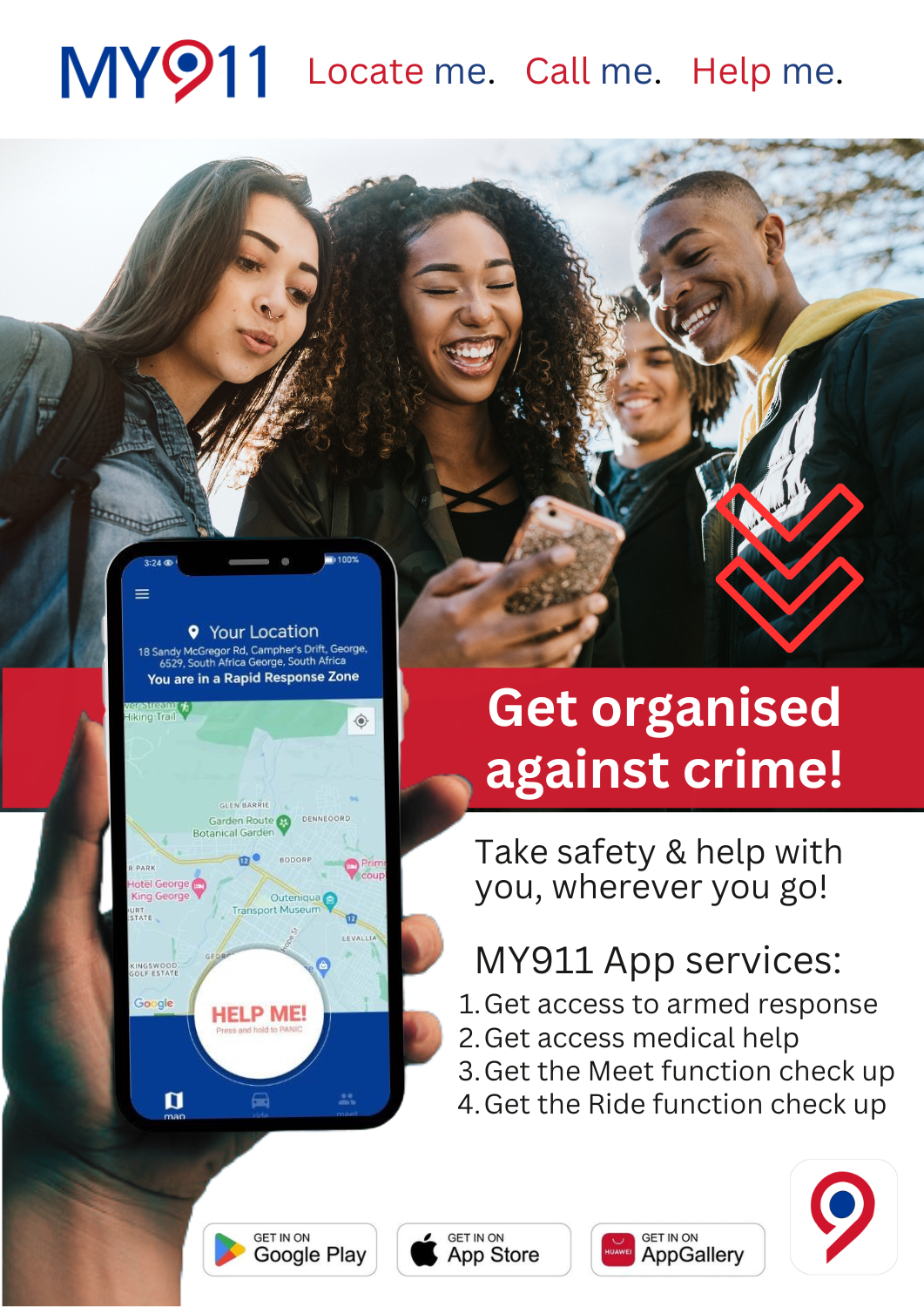

MY911 | Smart Help You Can Rely On During Emergencies – Real Help, Real People – For Peace Of Mind
Executive Summary
This white paper outlines how MY911.co.za addresses critical gaps in conventional emergency communication systems, offering a robust platform for rapid, accurate, and trustworthy dispatch of emergency services, including fast help customer service.
Introduction: Ensuring Safety in a Connected World
While modern communication technologies have revolutionised connectivity, they also underscore the critical need for advanced and dependable emergency response mechanisms capable of handling incidents of varying severity, including life-threatening situations (Oluwatofunmi et al., 2023). Despite the advancements, a significant challenge remains in ensuring that individuals can reliably and efficiently connect with trusted emergency contacts and services, especially given that many traditional emergency numbers face issues of public distrust, lack of awareness, or perceived inoperability (Oluwatofunmi et al., 2023).
Implementing fast help customer service in emergency situations ensures timely assistance and enhances overall safety.
The Evolving Landscape of Emergency Response
The global push for standardised emergency numbers, such as Europe’s 112, highlights an international recognition of the need for streamlined, reliable communication pathways during crises, yet many regions still grapple with fragmented or inefficient systems (Lelow & Marincioni, 2025). South Africa, for instance, has adopted 112 as a universal emergency number, yet challenges persist regarding infrastructure and the effective utilization of resources within emergency coordination centers (Christopher et al., 2023). This necessitates innovative approaches to integrate mobile technology with existing emergency infrastructure, particularly by leveraging geolocation capabilities to improve response efficiency (Guzman et al., 2014). Emerging smartphone applications can significantly expedite emergency response by accurately pinpointing caller locations, thus mitigating delays often attributed to miscommunication during call-taking processes (Gabella et al., 2024; Šterk & Praprotnik, 2017).
Introducing MY911.co.za: A New Paradigm for Safety
www.my911.co.za |This platform represents a crucial advancement in emergency management, integrating cutting-edge mobile technology to overcome the limitations of traditional emergency services and foster greater public trust and efficiency.
The Challenge: Gaps in Traditional Emergency Services
Traditional emergency communication systems often suffer from significant inefficiencies, including slow response times, difficulties in precisely locating individuals in distress, and a lack of real-time information flow to first responders (Repanovici et al., 2022).
Delays in Reporting and Response
These delays are often exacerbated by the manual nature of current processes, which frequently involve verbal descriptions of locations that can be imprecise, particularly in rapidly evolving or unfamiliar environments (Xue & Roy, 2022).
Lack of Real-time Information for First Responders
This deficiency often leads to suboptimal resource allocation and increased response times, directly impacting the effectiveness of emergency interventions (Boden et al., 2016). Furthermore, the absence of standardised mobile applications across emergency services exacerbates these issues by hindering the seamless transmission of critical user data and real-time location information to dispatch centers (Shaik et al., 2025).
Vulnerabilities in Existing Infrastructure
These weaknesses are particularly evident in regions with poor internet connectivity or inadequate infrastructure, where emergency operations struggle to support real-time interventions, as observed during health crises in various African countries (Mekbib & Kibiye, 2025). This highlights the pressing need for resilient, technologically advanced solutions that can function effectively even in challenging infrastructural environments.
MY911.co.za: A Unified Solution for Enhanced Safety
MY911.co.za addresses these systemic inefficiencies by providing a comprehensive, integrated platform designed to streamline the emergency response process from initial alert to resolution, thereby enhancing both efficiency and public trust. This innovative system leverages advanced mobile technology, including geolocation and real-time data exchange, to overcome the critical limitations inherent in conventional emergency communication infrastructures (Chavan, 2023).
How MY911.co.za Works: Streamlining Emergency Communication
The platform centralizes call-taking and dispatch functions through a sophisticated algorithm-based system, ensuring standardized and efficient processing of emergency requests (Finlayson, 2017).
Key Features and Functionalities
Key features include automated location identification, direct communication channels with responders, and secure personal medical information access for enhanced incident management (Suryawanshi, 2021).
Unparalleled Speed and Accuracy
By minimising the time between an emergency occurrence and the arrival of aid, MY911.co.za drastically reduces response times, a crucial factor in improving outcomes in critical situations (Venkateshperumal et al., 2024).
Benefits for Stakeholders
This unparalleled speed and accuracy are crucial for emergency prehospital care, as they enable early activation of the emergency response system and provide on-scene care more rapidly, directly contributing to improved patient outcomes and reduced damage in incidents such as fires or accidents (Gabella et al., 2024; Zhang et al., 2025).
For Individuals: Personal Safety and Peace of Mind
The platform offers users immediate access to emergency assistance, mitigating the anxiety and fear often associated with traumatic situations by providing a direct link to help (Olaleye et al., 2021).
For Communities: Collaborative Emergency Management
Through MY911.co.za, communities can foster a more coordinated and effective response to emergencies, thereby enhancing overall public safety and resilience against various threats.
For Emergency Services: Optimised Response and Resource Allocation
The integration of MY911.co.za into existing emergency communication infrastructure streamlines dispatcher workflows by providing coherent and complete information promptly, significantly improving the accuracy of information received by dispatchers and allowing for immediate prioritisation of life-threatening emergencies (Venkateshperumal et al., 2024).
Building Trust: Security and Reliability of MY911.co.za
The system’s robust architecture and stringent data protection protocols are designed to maintain the integrity and confidentiality of sensitive user information, fostering public confidence in its operational efficacy and ethical standards.
Data Privacy and Protection
MY911.co.za employs end-to-end encryption and adheres to global data protection regulations to safeguard all personal and medical data, ensuring that sensitive information is accessible only to authorized emergency personnel during a crisis.
Robust Infrastructure and Uptime Guarantee
The platform is built upon a resilient, geographically distributed server network, guaranteeing continuous operation and immediate access to emergency services even during periods of high demand or localised infrastructure failures.
Compliance with Industry Standards
Adherence to stringent international and local industry standards for emergency response technology and data management further solidifies MY911.co.za’s commitment to reliability and trustworthiness, ensuring its operational framework meets the highest benchmarks for security and performance.
Implementation and Integration
This section delineates the strategic phased rollout of MY911.co.za and its seamless integration into existing emergency communication frameworks, emphasizing scalability and interoperability. The phased rollout ensures that the system can be adapted to various operational contexts, from urban centers to rural areas, while the emphasis on interoperability guarantees compatibility with diverse emergency service protocols and technologies (Cintora-Sanz et al., 2023).
Seamless Integration with Existing Systems
MY911.co.za leverages advanced APIs and modular architecture to facilitate effortless integration with current emergency communication infrastructures, such as Computer-Aided Dispatch systems and Public Safety Answering Points, minimising disruption and maximising operational efficiency (Sathvik, 2024).
Scalability for Future Growth
The platform’s architectural design anticipates and accommodates exponential increases in user base and data volume, ensuring sustained performance and responsiveness as demand for its services expands. This inherent scalability ensures that MY911.co.za remains a robust and reliable solution capable of adapting to future technological advancements and evolving emergency response needs (Tonwe, 2025).
User Adoption and Training Initiatives
To facilitate widespread acceptance and proficiency, comprehensive training programs and intuitive user interfaces are critical for both end-users and emergency responders, ensuring seamless integration into daily routines and emergency protocols. These initiatives are designed to empower users with the knowledge and skills necessary to effectively utilise the platform, thereby maximising its potential for enhancing public safety and emergency response capabilities. Furthermore, a comprehensive literature review and ongoing research underpin the development of MY911.co.za, incorporating insights from global emergency response trends and mitigating factors to enhance its operational effectiveness and adaptability (Abudu et al., 2025).
Conclusion: A Safer Future with MY911.co.za
This white paper has illuminated the transformative potential of MY911.co.za as a comprehensive, secure, and highly efficient emergency response platform, designed to significantly enhance personal safety, community resilience, and the operational capabilities of emergency services. Its advanced features, such as real-time alerting and robust infrastructure, offer a modern alternative to traditional emergency communication methods (Nayak et al., 2021).
References
-
Abudu, H. D., Mewomo, M. C., Adjei, K. O., & Bondinuba, F. K. (2025). A SYSTEMATIC REVIEW OF THE MITIGATING FACTORS FOR EMERGENCY RESPONSE IN FACILITIES [Review of A SYSTEMATIC REVIEW OF THE MITIGATING FACTORS FOR EMERGENCY RESPONSE IN FACILITIES]. CIB Conferences, 1(1). https://doi.org/10.7771/3067-4883.1856
-
Boden, A., Al-Akkad, A., Liegl, M., Büscher, M., Stein, M., Randall, D., & Wulf, V. (2016). Managing Visibility and Validity of Distress Calls with an Ad-Hoc SOS System. ACM Transactions on Computer-Human Interaction, 23(6), 1. https://doi.org/10.1145/2987382
-
Chavan, S. (2023). Review Paper on Cloud-Based Emergency Response System. International Journal for Research in Applied Science and Engineering Technology, 11(11), 2217. https://doi.org/10.22214/ijraset.2023.56569
-
Christopher, L. D., Naicker, V., & Naidoo, N. (2023). Quality improvement in emergency medical services: shared experiences of South Africa with pre-war Ukraine. Technology Audit and Production Reserves, 5, 37. https://doi.org/10.15587/2706-5448.2023.285585
-
Cintora-Sanz, A. M., Colmenar-García, C., Gómez-Usabiaga, C., García-Martinez, R., Lafuente-Saenz, R., Sierra-García, T., Montero-Pernía, C., Blanco, A. G., Vazquéz-Rodríguez, T., & Horrillo-García, C. (2023). Lean approach in the application of new technologies: integration of risk, situational awareness, and resilience by a prehospital emergency medical service. Environment Systems & Decisions, 43(4), 721. https://doi.org/10.1007/s10669-023-09930-1
-
Finlayson, M. J. (2017). An analysis of emergency response times within the public sector emergency medical services in KwaZulu-Natal. https://doi.org/10.51415/10321/2922
-
Gabella, J. L., Gualda, I. A. P., Altoé, I. L., Beltrame, M. H. A., Silva, P. H. A. da, Costa, D. B., Paggi, F. C. G., Filho, S. S. F., Massago, M., Paulo, L. G. de, Bitencourt, M. R., Joiner, A., Vissoci, J. R. N., & Andrade, L. de. (2024). Designing, development and validation of an app to reduce the response time of the emergency medical services. PLoS ONE, 19(3). https://doi.org/10.1371/journal.pone.0299828
-
Guzman, J. B. de, Guzman, R. C. C. de, & Ado, R. G. (2014). Mobile Emergency Response Application Using Geolocation for Command Centers. International Journal of Computer and Communication Engineering, 3(4), 235. https://doi.org/10.7763/ijcce.2014.v3.327
-
Lelow, G., & Marincioni, F. (2025). The European emergency number 112: Exploring the potential of crowd-sourced information for emergency management. International Journal of Disaster Risk Reduction, 120, 105376. https://doi.org/10.1016/j.ijdrr.2025.105376
-
Mekbib, M. S., & Kibiye, D. (2025). Strengthening emergency response in hard-to-reach settings through mobile Public Health Emergency Operation Centre. Journal of Interventional Epidemiology and Public Health, 8(3). https://doi.org/10.37432/jieph-d-25-00139
-
Nayak, S. K., Dutta, A., Bhowmick, S., Ghosh, S., Jha, S. K., Bose, R., & Roy, S. (2021). Implementing an Structural Prototype of Emergency Services in Web – Application. International Journal Of Engineering And Computer Science, 10(8), 25370. https://doi.org/10.18535/ijecs/v10i8.4613
-
Olaleye, S. A., Sanusi, I. T., Agjei, R. O., & Adusei‐Mensah, F. (2021). Please call my contact person: mobile devices for a rescue mission during an emergency. Information Discovery and Delivery, 49(2), 114. https://doi.org/10.1108/idd-06-2020-0064
-
Oluwatofunmi, A., Chikezie, B. C., Ogundare, T. P., & Osayame-Ebohon, M. (2023). Dual-Activation Emergency Situation Notification System: A Feature Driven Development Approach. International Journal of Safety and Security Engineering, 13(4), 647. https://doi.org/10.18280/ijsse.130406
-
Repanovici, R. M., Nedelcu, Șerban, Tarbă, L. A., & Busuioceanu, S. (2022). Improvement of Emergency Situation Management through an Integrated System Using Mobile Alerts. Sustainability, 14(24), 16424. https://doi.org/10.3390/su142416424
-
Sathvik, S. P. (2024). A Survey on Emergency Vehicle Route Optimization and Traffic Management Application. International Journal for Research in Applied Science and Engineering Technology, 12(5), 1668. https://doi.org/10.22214/ijraset.2024.61911
-
Shaik, F. A., Demil, G., & Oussalah, M. (2025). AI-based Approach in Early Warning Systems: Focus on Emergency Communication Ecosystem and Citizen Participation in Nordic Countries. arXiv (Cornell University). https://doi.org/10.48550/arxiv.2506.18926
-
Šterk, M., & Praprotnik, M. (2017). Improving emergency response logistics through advanced GIS. Open Geospatial Data Software and Standards, 2(1). https://doi.org/10.1186/s40965-017-0014-7
-
Suryawanshi, Prof. S. (2021). Efficient Platform for Emergency Healthcare Services. International Journal for Research in Applied Science and Engineering Technology, 9(5), 478. https://doi.org/10.22214/ijraset.2021.34189
-
Tonwe, M. (2025). OPTIC-ER: A Reinforcement Learning Framework for Real-Time Emergency Response and Equitable Resource Allocation in Underserved African Communities. arXiv (Cornell University). https://doi.org/10.48550/arxiv.2508.12943
-
Venkateshperumal, D., Rafi, R. S., Ahmed, S., & Khokhar, A. (2024). Efficient VoIP Communications through LLM-based Real-Time Speech Reconstruction and Call Prioritization for Emergency Services. arXiv (Cornell University). https://doi.org/10.48550/arxiv.2412.16176
-
Xue, M., & Roy, S. (2022). Cyber-Physical Queueing-Network Model for Risk Management in Next-Generation Emergency Response Systems. arXiv (Cornell University). https://doi.org/10.48550/arxiv.2101.11198
-
Zhang, H., Zhang, R., & Sun, J. (2025). Developing real-time IoT-based public safety alert and emergency response systems. Scientific Reports, 15(1). https://doi.org/10.1038/s41598-025-13465-7